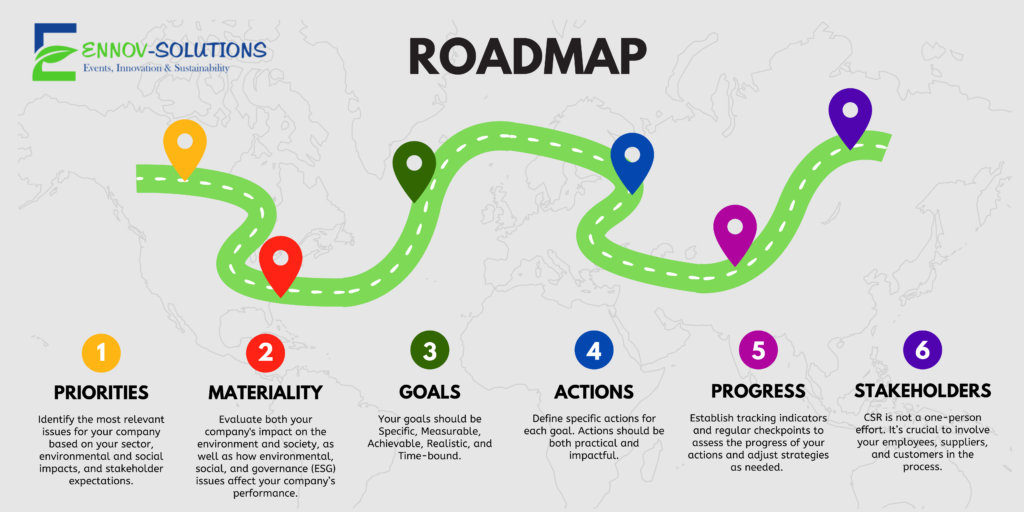
Not sure where to start? Here are 6 key steps to guide you through the process:
1 – Define your CSR priorities
Identify the most relevant issues for your company based on your sector, environmental and social impacts, and stakeholder expectations.
2 – Assess double materiality
Evaluate both your company’s impact on the environment and society, as well as how environmental, social, and governance (ESG) issues affect your company’s performance. This analysis helps you better understand long-term risks and opportunities.
3 – Set SMART goals
Your goals should be Specific, Measurable, Achievable, Realistic, and Time-bound. For example:
- reduce CO2 emissions by 20% in 3 years…
- achieve gender parity in the Executive Committee within 2 years…
4 – Implement concret actions
Define specific actions for each goal. For example, choose sustainable suppliers, reduce energy consumption, or implement CSR training for employees. Actions should be both practical and impactful.
5 – Monitor and evaluate progress
Establish tracking indicators and regular checkpoints to assess the progress of your actions and adjust strategies as needed. Transparent reporting with precise indicators is essential for the credibility of your approach.
6 – Engage all stakeholders
CSR is not a one-person effort. It’s crucial to involve your employees, suppliers, and customers in the process.
By following these steps, you can create a robust, credible, and tailored CSR roadmap. The goal is to generate long-term value for your business, its stakeholders, and the planet 🌍!