
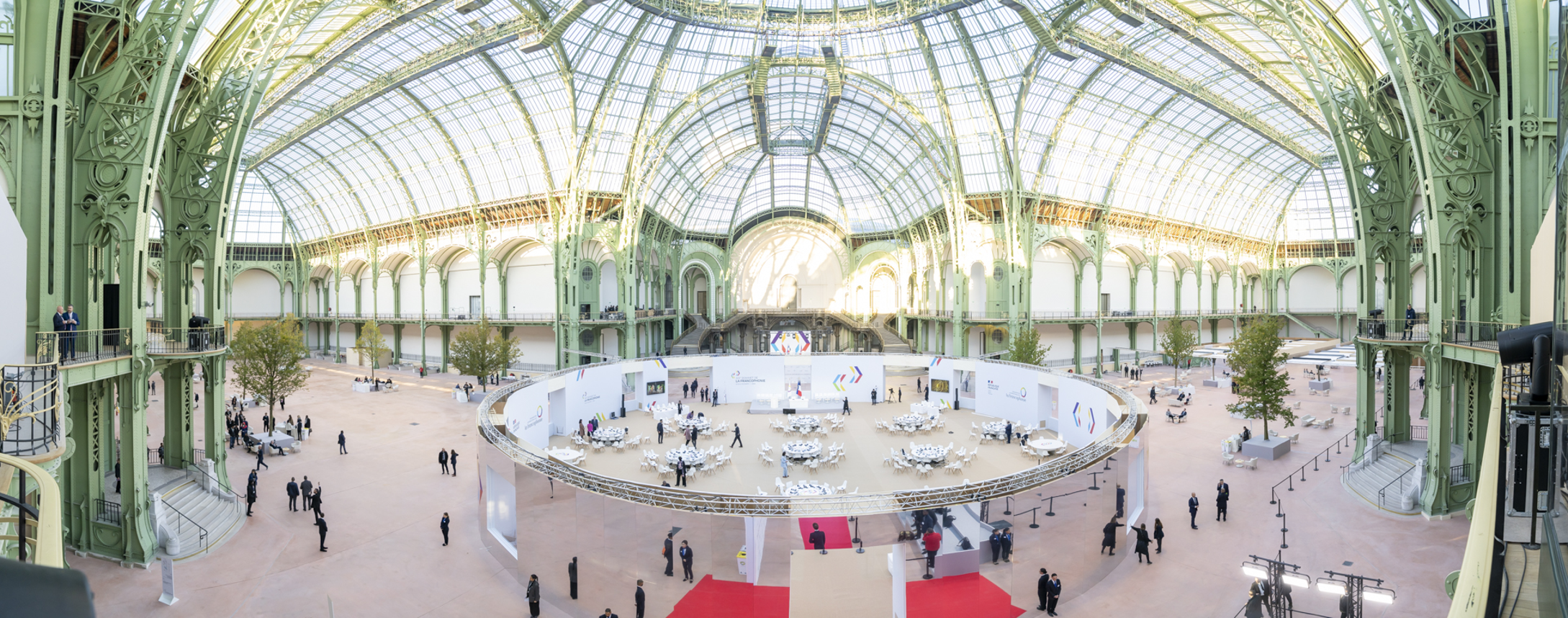
The Francophonie Summit is a major international event bringing together French-speaking nations to address shared challenges such as international cooperation, economic development, and increasingly, sustainability. I had the privilege of participating in this event, held on October 4 and 5, 2024, at the Château de Villers-Cotterêts and the Grand Palais in Paris with the Ministry of Foreign Affairs. The summit adhered to strict sustainability standards and was certified under ISO 20121:2024, the global benchmark for responsible event management. The objective was to align all operations with sustainable development principles while minimizing the event’s carbon footprint.
1/ Event Sobriety: The organization minimized material rentals by opting for local and reusable equipment, significantly reducing transportation and logistical needs.
2/ Local and Responsible Suppliers: All service providers were 100% local, with 55% holding ISO 20121 certification, ensuring adherence to sustainable practices. Additionally, all suppliers signed a CSR charter, and 80% actively shared their sustainability efforts online.
3/ Reusable and Recoverable Materials: Over 80% of materials were rented, and 55% of consumable items were reclaimed for future reuse.
4/ Waste Reduction: On-site waste sorting was implemented, and paper use was drastically reduced by digitalizing invitations and other documents.
5/ Shared and Collective Transportation: A bus and carpooling system was established to encourage collective transportation among participants.
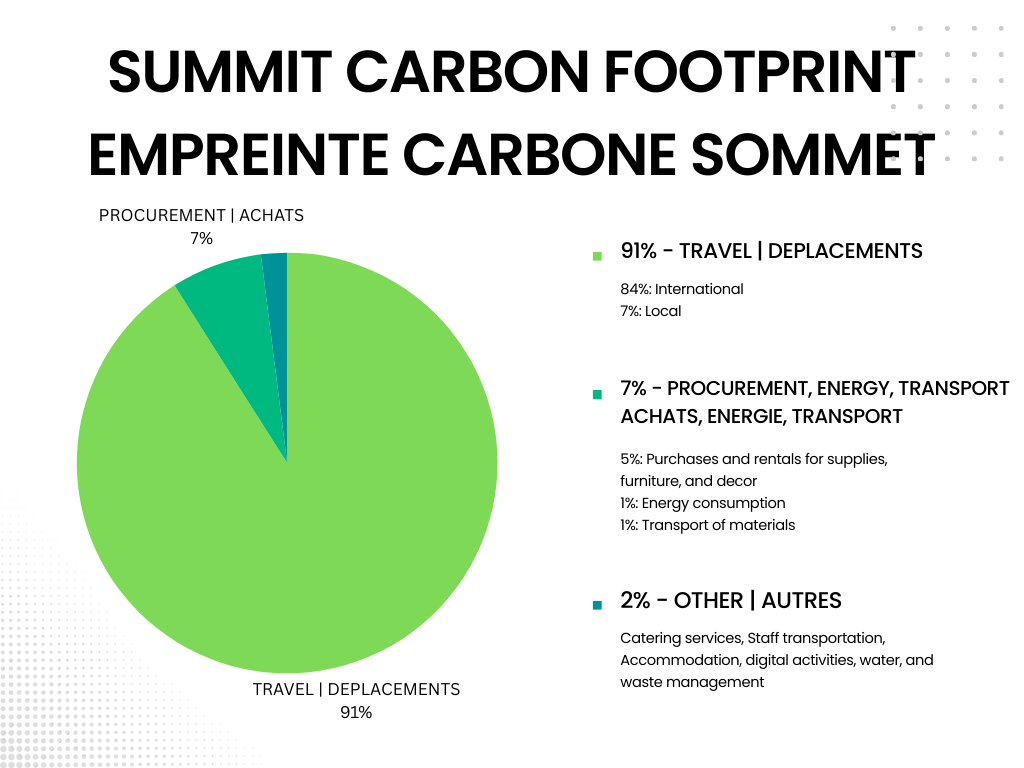
6/ Event Carbon Footprint Calculation: In line with ISO 20121 certification requirements, a detailed carbon footprint analysis determined a total impact of 1380 tonnes of CO2 equivalent.
The main sources of emissions identified are:
Key Strengths of ISO 20121 Certification
The ISO 20121 certification achieved by the organization of the Francophonie Summit highlighted the effectiveness of structured sustainable practices based on 6 key pillars:
1/ Comprehensive Context Analysis: An initial diagnostic process identified the critical challenges and priorities of internal and external stakeholders.
2/ Stakeholder Engagement: Interviews were conducted to understand the needs and expectations of all key stakeholders.
3/ Employee Commitment: The Responsible Management System (RMS) was well integrated among team members, supported by active leadership to ensure necessary resources.
4/ Continuous Improvement: A systematic review of leadership feedback and previous event evaluations provided a foundation for ongoing enhancements.
5/ Value-Added Internal Audits: Before the certification audit, internal audits identified optimization opportunities, adding further value to the process.
6/ Certified Suppliers: The inclusion of ISO 20121-certified suppliers enhanced communication and operational efficiency among partners.
A Benchmark for Sustainable Events
The successful organization of the Francophonie Summit and its ISO 20121 certification set a high standard for sustainable events. These exemplary practices and carbon assessments serve as a guiding reference for future organizations committed to eco-responsibility, proving that international gatherings can align with environmental preservation goals.