
Understanding the Event Fresk: Why is it beneficial to implement with your teams?
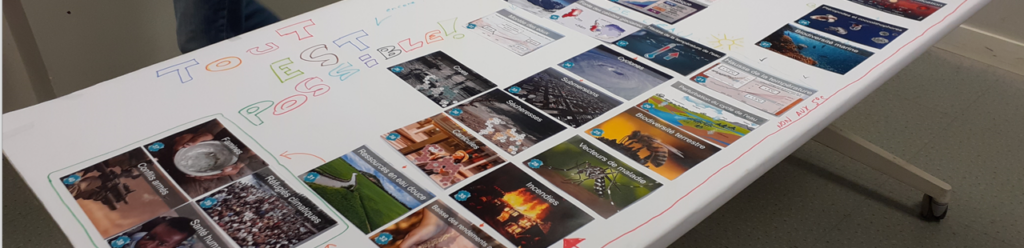
I recently participated in an Event Fresk. Here’s an overview of this experience.
The Event Fresk is an interactive pedagogical approach like the Climate Fresk, but with a primary focus on environmental concerns associated with event management. Its goal is to heighten participant awareness regarding the environmental impacts of events and to advocate for more sustainable practices within this realm. This method comprehensively addresses various facets such as waste management, energy consumption, mobility, and responsible sourcing, prompting participants to contemplate diverse stages of event planning and execution to pinpoint solutions for reducing its environmental footprint.
Why is this pedagogical approach compelling?
- It fosters collective and invigorating collaboration among industry professionals within our sector, fostering a rich exchange of ideas.
- The diversity of events enables varied approaches from one project to another, enriching the dialogue.
- It strengthens team cohesion and group dynamics.
- It promotes responsible event management, highlighting that impactful change often arises from a series of small actions.
The Event Fresk thus serves as a platform for collective co-creation, facilitating the construction of cause-and-effect frameworks to grasp how event organization can influence the environment – economically, socially, or environmentally. These impacts ripple through ecosystems, accumulating to yield tangible regional or global consequences, which subsequently feedback into our events. Understanding these causal chains is paramount.
TRANSPORTATION OF PERSONS: Origin and mode of travel are pivotal considerations. For instance, our exchange revealed that 89% of emissions from the Cannes Film Festival stemmed from transportation. Recently, I attended the event ChangeNow where 86% of the carbon footprint come from Transportation. Providing mobility alternatives and fostering participant awareness directly mitigates the event’s carbon footprint.
TRANSPORTATION OF GOODS AND MATERIALS: The contemporary trend leans toward reuse, exchange, and recycling, exemplified by the extensive use of wood as a sustainable substitute. However, foremost among principles is reduction—diminishing material volumes leased or purchased significantly curtails the event’s carbon footprint.
CATERING: Strategies to minimize catering impact vary, from reducing red meat consumption to sourcing locally for seasonal produce. Effective implementation necessitates meticulous planning.
BIO-WASTE: Bio-waste, an increasingly significant component of event waste, now mandates comprehensive sorting and waste reduction efforts as per European law. Collective and individual engagement is vital in this endeavor, requiring coordinated planning and communication.
WASTE: Waste reduction across all categories is imperative. Our recent endeavors with the event Autonomy Mobility World Expo have demonstrated a notable 22% reduction in waste through straightforward methodologies, underscoring the importance of strategic planning and stakeholder coordination.
Additional facets such as giveaways, conceptual definition, scenography, programming, and human resources were also addressed, alongside their direct and indirect ramifications, to be explored further in forthcoming workshops.
We are poised to facilitate Event Fresks shortly. Please don’t hesitate to contact us if you’re interested: